- Buckets and Riches
- Posts
- 🏀 The NBA’s Most Expensive Injuries: When Max Deals Went Wrong
🏀 The NBA’s Most Expensive Injuries: When Max Deals Went Wrong

Jatin Hasija
October 30, 2025

Welcome to Buckets and Riches — where NBA stars don’t just shoot threes, they stack Gs. From tunnel fits worth mortgages to endorsement empires and crypto hiccups, we break down how basketball’s elite earn it, flex it, and sometimes… brick it. 🏀💸
The latest edition of our newsletter covers:
The Giant Who Couldn’t Heal
From Scoring King to Sidelined
Big Deal, Bigger Breakdown

💸Biggest What-If
Yao Ming: $93 Million Career Cut Short

It will not be hyperbolic to say that Yao Ming is one of the greatest ‘what-ifs’ in 21st-century sports. Missing just two games out of the first 246 matchups of his career is not an easy feat, especially when dealing with the physical demands of being several inches over seven feet tall.
Forced into the NBA draft by Li Yaomin, the Shanghai Sharks’ deputy GM in 2002, Ming’s potential was otherworldly. After signing a rookie contract worth $12.4 million over three years with the Houston Rockets, he immediately proved his mettle.
Ming averaged 13.5 points and 8.2 rebounds in 82 games in his rookie season. And by the time his third season came around, he was putting up 18.3 points and 8.4 rebounds per game. His productivity, mixed with his availability, led to him being granted a 5-year contract worth $75 million.
However, the very next season, in 2005-06, Ming would suffer his first big injury. His big toe on his left foot had developed osteomyelitis. He played merely 57 games that year. Funnily enough, he was having his best-ever season up until the injury with 22.3 points and 10.2 rebounds a night on 50+ FG%.
The 2006-07 season was yet another up-and-down one for Ming. While he did have his peak in terms of averages (25 & 9.4), he just played 47 games. He missed games due to breaking a bone in his knee in December 2006 while going up for a block.
Ming did return in time for the playoffs, but the Rockets lost in seven to the Jazz in the first round despite having homecourt advantage and Yao dropping 29 in Game 7.
In February 2008, Ming sustained a stress fracture in his left foot and missed the playoffs. That season, he saw a slight dip in productivity, but it was not that noticeable since he put up 22.0 points, 10.8 rebounds, and 2.0 blocks.
This injury, even though it did not keep him off the court by much (he played 77 games in 2008-09), changed Ming’s career forever.
“I can tell you my foot never came back to [how it was] before after my surgery in 2008. Today, I feel this foot is almost completely numb on top of my foot. The surgery damaged my nerves. I feel less down there,” Ming said in 2016.
He missed the entirety of the 2009-10 season and played merely five games in the 2010-11 campaign before retiring from the NBA for good.
Lower extremity injuries robbed Ming of what could’ve been a career for the ages. Instead, fans got glimpses of what a Shaq-esque level of player in terms of dominance could achieve if healthy. And what an unfortunate coincidence that it was the season right after his $75 million payday that he would go on to lose his grip on his NBA career.
💸 Moneyball Moments
In 2011, the Trail Blazers paid Brandon Roy $14 million not to play after amnestying him due to chronic knee issues, yet he returned the next year with Minnesota. Portland’s total payout for injured stars (Roy + Greg Oden) topped $35 million in 2012 alone.
💰Mad Money, Mad Injuries
Tracy McGrady: From Max Money to Misery
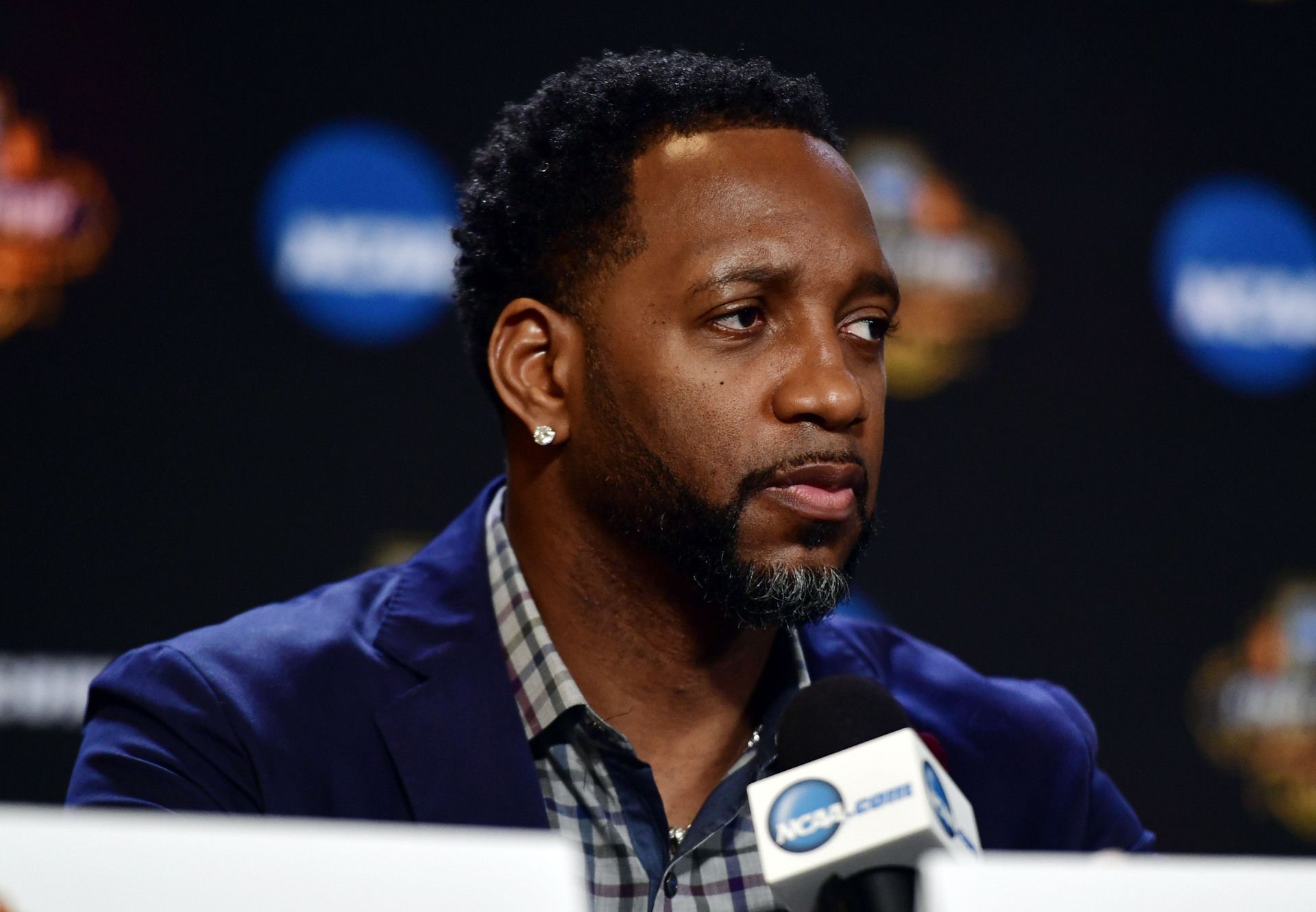
Tracy McGrady saying he would have been just as successful as Kobe Bryant if he had a prime Shaquille O’Neal playing alongside him may sound ludicrous at first. However, upon deeper examination of how T-Mac was in his prime, it will soon feel that the claim isn’t too outlandish. Unfortunately, his prime lasted far shorter than anyone expected.
His first three seasons in the league, after being drafted by the Toronto Raptors in 1997, saw him put up modest averages. McGrady managed to return double-figure ppg only in his third year. He recorded 5.4 points on 45% shooting from the field off the bench for the Raptors in the 1999-2000 campaign.
McGrady’s career trajectory altered completely when he left the Raptors as a free agent in the summer of 2000. He joined the Magic for $92.7 million over seven years.
His very first season as a first option for the Magic saw him win Most Improved Player honors after averaging 26.8 points and 7.5 rebounds per night. McGrady’s career took off from there, and he peaked at 32.1 ppg in 2002-03. He then joined the Rockets after the 2003-04 season.
Of course, Mac’s name wouldn’t be on this list if an eventual fall from grace weren’t there.
McGrady’s first major injury came during the 2005-06 season when he suffered from back spasms. He was even carried off the court during an especially painful episode.
After playing merely 47 games in 2005-06, he bounced back and averaged 24.6 points, 5.3 rebounds, and 6.5 assists the following year. He was still dealing with nagging back spasms at the time, but his situation was better than the previous season. This was also the final year of his $92.7 million deal.
His 3-year/$63 million extension with the Rockets had kicked in at this point, and things were looking up as the Rockets went on a 22-game winning streak in 2007-08. Unfortunately, come playoff time, McGrady had fluid drained from both his shoulder and knee repeatedly while also being on painkillers.
The 2008-09 season was when things began to crumble for Tracy. He suffered a season-ending injury in February 2009 due to a microfracture. His averages had declined to less than 16 points per game, and the burst that he once had off the dribble just wasn’t there any longer.
The former All-Star bounced around the league for a few single-year stints with the Knicks, Hawks, and Pistons before making his way onto the Qingdao Eagles in the 2012-13 season for one year, where he averaged 25 points. He finished his career as a Spur, one year before they won the title in 2014.
Reflecting on his injuries, T-Mac once expressed a deep level of remorse. “I knew I wasn't gonna be that dude again, and that was the most devastating thing. can't tell you how depressed I was to know that I'm on this level, and then I'm down here now, and I never, never reached that level again. Brother, I was hurt.”
It’s not as though a giant contract immediately led to a significant spiral downwards for T-Mac. After all, he even signed an extension with the Rockets.
But McGrady’s is one of those stories that makes fans go, “Damn, really wish things were different.” Especially Magic fans, given that they were dealt the double-dose of McGrady and Grant Hill.
🏀 Bad Luck or…
Jermaine O’Neal: The $126 Million What-If
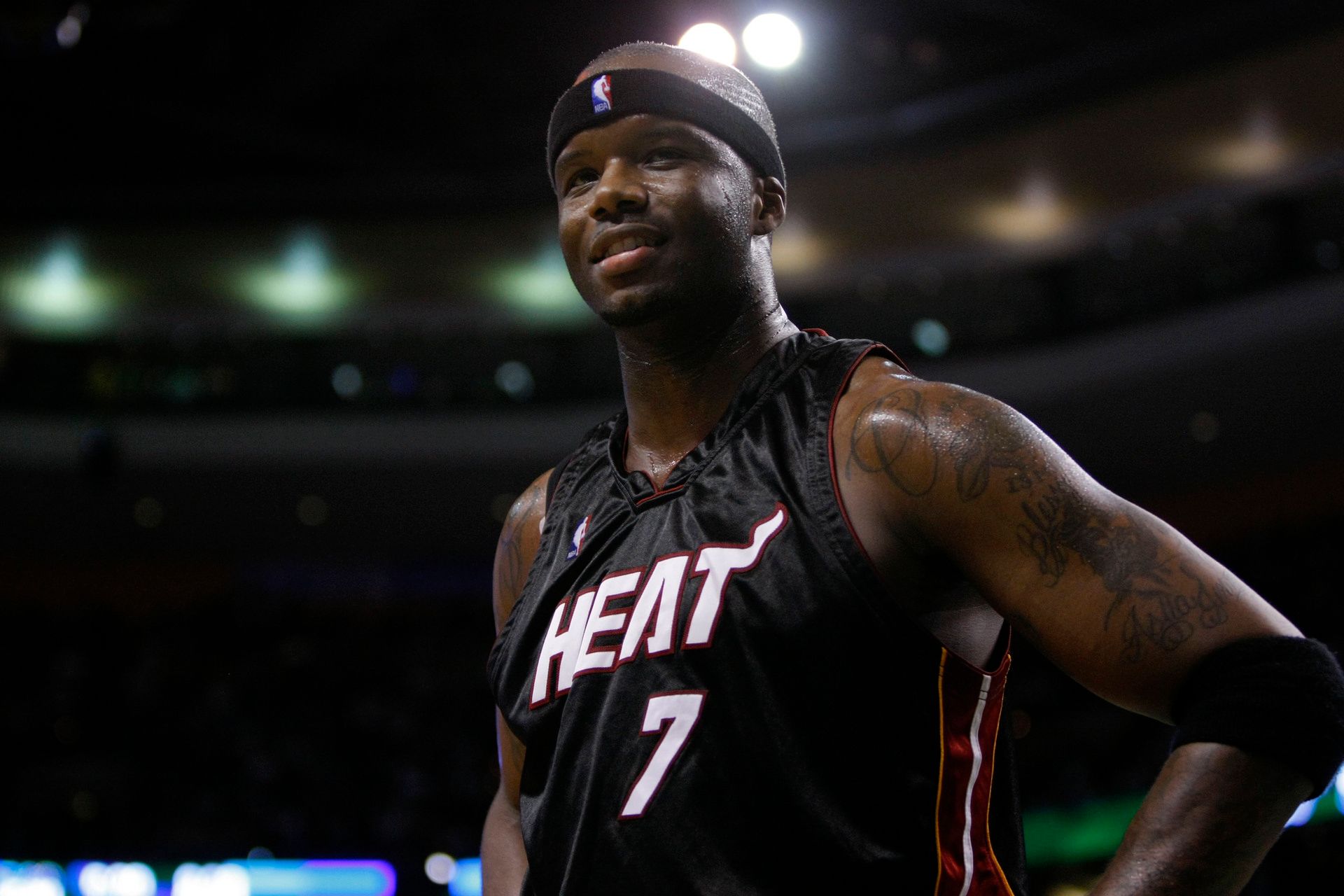
In July 2003, the Indiana Pacers gave 24-year-old Jermaine O’Neal a seven-year, $126 million contract, making him one of the highest-paid players in the league at the time. The contract was influenced by the two seasons before that, where he landed a Most Improved Player award, while also making the All-Star team.
O’Neal averaged 20.8 points, 10.3 rebounds, and 2.3 blocks per game, earning an All-NBA Third Team selection and anchoring the Pacers to 48 wins in the 2002-03 season. That was a testament to not just his scoring but also his defensive abilities. This was a star the Pacers were banking on to help Reggie Miller and the team win a title.
But just a year later, things took a turn for the worse. In November 2004, O’Neal was a central figure in the infamous Malice at the Palace. He threw a punch during the brawl that led to a 25-game suspension, which was later reduced to 15. The Pacers were knocked out by the Pistons in the second round, and Reggie ended his career without a ring.
After that season, chronic knee issues plagued O’Neal for years. In 2008, he missed 33 straight games due to a bone bruise in his left knee, further hampering his mobility and explosiveness.
While O’Neal still made six All-Star appearances overall and averaged 19+ points for four straight seasons, the long-term return on Indiana’s max investment dwindled quickly. The first four seasons in his deal were deserving of the contract; in his last season for the team (2007-08), he played just 42 games and averaged a meager 13.6 points before he was shipped off to Toronto.
In hindsight, O’Neal was both a victim of bad timing and bad luck. He had the skill, but injuries and on-court mishaps shifted his career trajectory. The Pacers paid like they were getting a top-10 franchise anchor for the decade. Instead, they got an All-Star whose prime flickered too fast.
🏀 Shot Clock Back: NBA Stat of the Year
In 1997, Grant Hill averaged 25.8 points, 8.6 rebounds, and 6.9 assists, drawing comparisons to Michael Jordan. Four years later, ankle surgeries turned his $93 million Orlando deal into one of the league’s first “super-injury” contracts, a reminder that even generational talent can’t outrun bad luck.